3.5 Hours from San Diego, CA
Mojave National Preserve in a Camper Van
Why Mojave National Preserve in a Camper Van?
Mojave National Preserve is 1.6 million acres between Joshua Tree, Death Valley, and Las Vegas — and it's the least visited of the three. No entrance fee, minimal visitor infrastructure, and some of the emptiest, darkest desert in California. If Joshua Tree feels crowded, this is where you go instead.
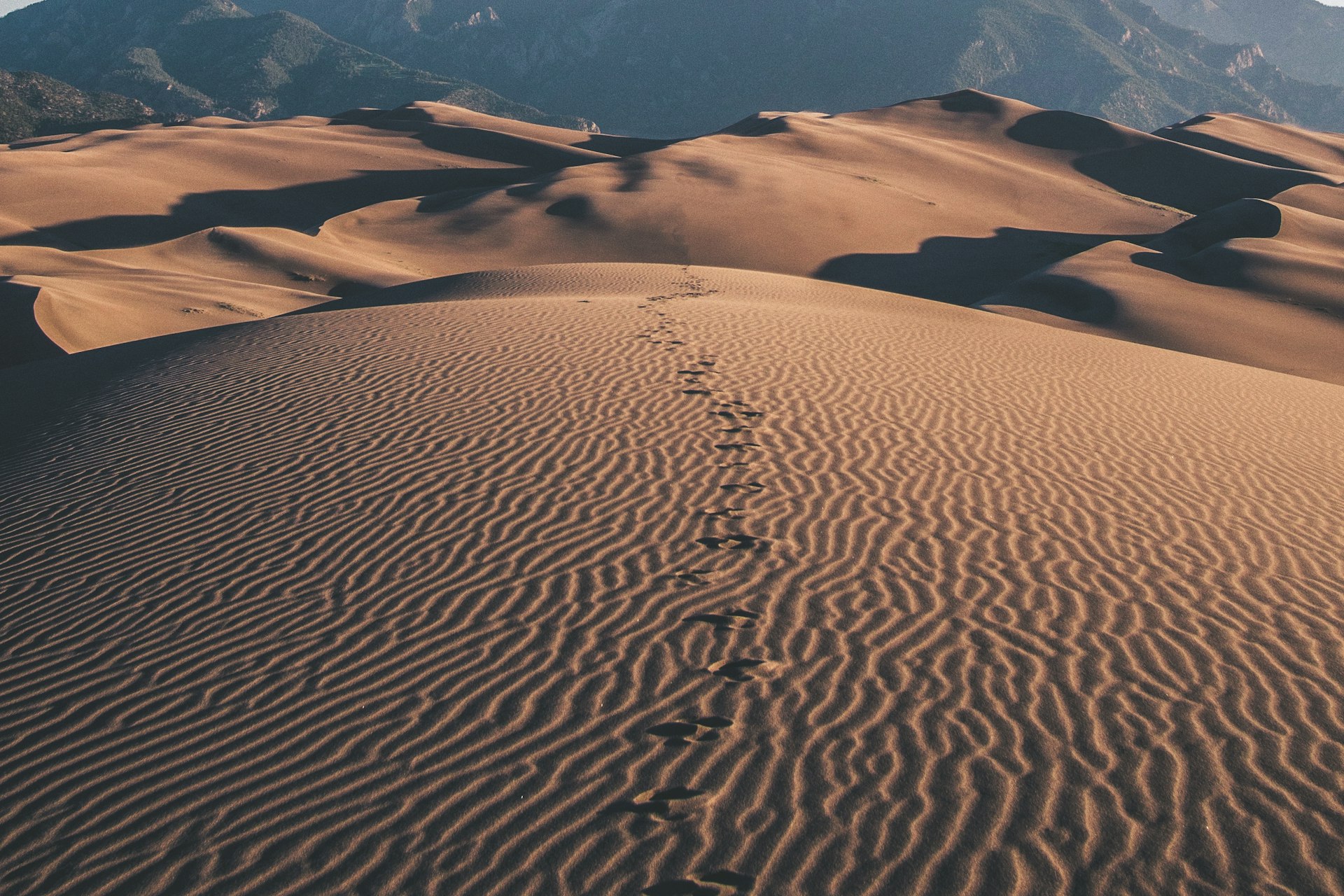
The Kelso Dunes rise nearly 650 feet — among the tallest dune fields in the country — and are famous for "singing sand" that produces a low booming sound when it slides. Cima Dome holds one of the largest and densest Joshua tree forests anywhere, and a short hike near Aiken Mine Road leads to a genuine lava tube you can climb down into, with sunlight streaming through a collapsed skylight.
Timing note: the preserve is low desert and gets extremely hot in summer, often exceeding 110°F with no shade. October through April is the right window, and camping is free and largely unregulated — pull off an existing road and set up, no permit required.
Getting There from San Diego, CA
Take I-15 North toward Barstow, then continue on I-15 to Baker and pick up Kelbaker Road South into the preserve — approximately 3.5 hours to the Kelso Depot Visitor Center. Fill up in Baker; fuel inside the preserve is unreliable.
This route pairs naturally with Death Valley (about 1.5 hours further north from Baker) — many renters combine the two into a single multi-day desert loop.
Best Campgrounds & Dispersed Sites
Hole-in-the-Wall Campground — Developed
First-come-first-served, no reservation
The preserve's main developed campground, set among rust-colored volcanic rock formations near the Rings Loop Trail. Has pit toilets and picnic tables but no water. Rarely full even on weekends given how few visitors the preserve gets.
Free Dispersed Camping — Preserve-Wide
Free, no reservation
Camping is permitted along most existing dirt roads throughout the preserve, generally within 100 feet of the road and away from developed areas. The Cima Dome area and the roads near Kelso Dunes are popular, quiet choices with excellent night skies.
Kelso Dunes Access Road — Dispersed
Free, no reservation
Camp near the base of the dunes for sunrise or sunset light on the sand, then hike up before the day heats up. The access road is graded dirt, manageable for most vehicles, with 4WD helpful in the sandier final stretch.
Must-See: The Lava Tube
A short hike and a steel ladder lead down into a genuine lava tube off Aiken Mine Road, reached via a rough dirt road that benefits from high clearance and 4WD. A collapsed section of ceiling lets sunlight pour in around midday, lighting the cave from below — one of the most photographed spots in the preserve, and one most visitors never see.
Van-Specific Tips
- ◆ Visit October through April. Summer heat is extreme and there's little shade or services inside the preserve.
- ◆ Fuel up in Baker or Needles before entering — gas stations inside the preserve are unreliable or nonexistent.
- ◆ El Capitan's 4WD is genuinely useful on Aiken Mine Road, Wild Horse Canyon Road, and the sandier approach to Kelso Dunes.
- ◆ Cell service is essentially nonexistent throughout the preserve. Download offline maps and tell someone your route before heading in.
- ◆ There is no potable water inside the preserve. Fill freshwater tanks completely in Baker or Barstow.
- ◆ The preserve is part of a designated Dark Sky region — genuinely some of the darkest, clearest skies in California.
- ◆ This pairs naturally with a Death Valley trip — Baker sits roughly between the two, making a combined loop easy to plan.
Ready for Mojave National Preserve?
Rent a van for this trip.
Empty roads, singing dunes, and a lava tube most people never find. El Capitan's 4WD is the right tool for the preserve's backcountry roads. Book through Outdoorsy.
More Destinations